
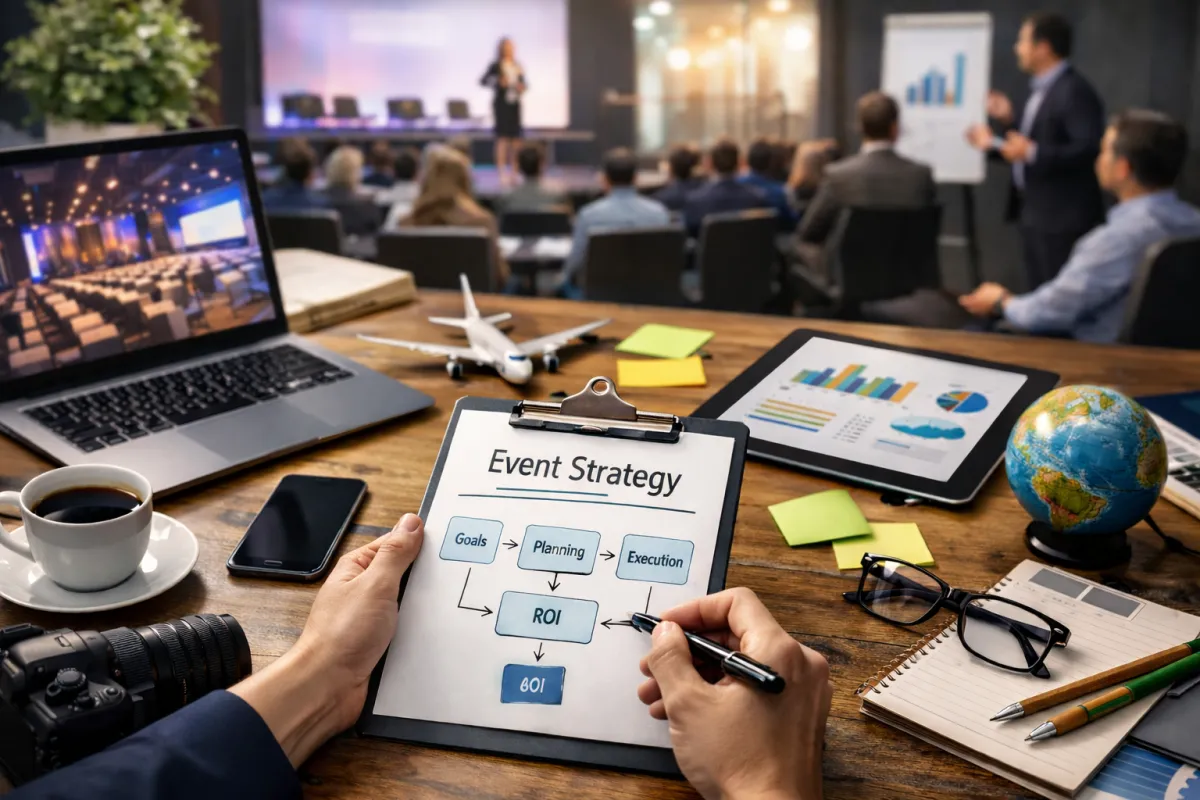
The Ultimate Corporate Event Strategy Guide for 2026: How to Plan Events That Drive Real Business Results
Let me tell you something I say to every CEO, HR director, and marketing executive who calls me.
If you are planning an event without a strategy, you are not planning an event. You are planning a very expensive party.
And here in New England, we do not throw money around just to feel good for a night. We build things that last.
I am Carol Connors, owner of Gatherique Events in Manchester, NH, and I have spent years transforming corporate gatherings into meaningful business moments. Today, I'm revealing effective corporate event strategies to help your next meeting, retreat, or conference drive real results for your organization.
Grab a cup of coffee. We are getting strategic.
What Is Corporate Event Strategy?
Corporate event strategy is the intentional planning of an event around clear business objectives.
It answers three fundamental questions:
Why are we hosting this event?
What measurable outcome do we expect?
How will every element of this event support that outcome?
If you cannot answer those questions clearly, you are not ready to book the ballroom.
A strategic event is designed to:
Increase revenue
Strengthen leadership alignment
Improve employee engagement
Launch a product with impact
Build client loyalty
Drive fundraising results
Expand brand visibility
Strategy always comes before logistics. Always.
Step One: Define the Business Objective First
One of the most frequently searched questions I see is:
How do I start planning a corporate event?
You start with the goal.
Not the venue.
Not the caterer.
Not the theme.
The goal.
For example:
A leadership retreat may aim to align executives around a three-year growth strategy.
A product launch may aim to generate 200 qualified leads.
A conference may aim to position your company as a thought leader in your industry.
A fundraiser may aim to increase donations by 25 percent year over year.
At Gatherique Events, we begin every engagement with strategic consultation before we touch a single vendor contract. Because clarity saves money, time, and frustration.
Step Two: Know Your Audience Inside and Out
Another common question:
How do I make my corporate event more engaging?
Engagement does not come from flashy decor. It comes from relevance.
Your audience determines:
Format
Tone
Duration
Technology integration
Entertainment
Content depth
Networking structure
A leadership team retreat is not the same as a company-wide training session.
A Gen Z workforce responds differently than seasoned executives.
If your content does not match your audience’s expectations, attention will drift faster than a New Hampshire snowstorm in April.
Step Three: Build the Experience Around Strategic Touchpoints
Every event has touchpoints. Strategic ones create impact.
Think through:
1. Pre Event Engagement
Save the dates with purpose
Personalized invitations
Pre event surveys
Teaser content
Clear expectations
When we integrate technology platforms for registration and communication, we do it intentionally to increase anticipation and collect data that informs the event design.
2. On Site Experience
Branded environments
Seamless check in
Thoughtfully timed agenda
Interactive sessions
Clear calls to action
Technology driven engagement tools are not just flashy add ons. They are strategic levers that boost participation and data collection.
3. Post Event Follow Up
This is where most companies fall flat.
If there is no follow up plan, the momentum dies within 72 hours.
A strategic post event plan includes:
Feedback surveys
Follow up meetings
Content recaps
Action item accountability
ROI analysis
If you are not measuring, you are guessing.
Step Four: Design for ROI, Not Just Aesthetics
Let us talk about the question executives really care about:
How do you measure the success of a corporate event?
Return on investment can look different depending on your objective.
Examples include:
Revenue generated
Leads captured
Employee retention improvements
Increased productivity metrics
Social media reach
Donation totals
Strategic alignment outcomes
At Gatherique Events, we build measurement frameworks into the planning phase, not after the fact. That way you can stand in front of your board and say with confidence, “Here is exactly what this event accomplished.”
And trust me, that is a powerful place to stand.
Step Five: Integrate Sustainability into Strategy
Sustainability is no longer a trend. It is an expectation.
Clients frequently ask:
How can we make our corporate event more eco-friendly?
Here are strategic approaches:
Digital programs instead of printed materials
Sustainable catering practices
Local vendor partnerships
Waste reduction plans
Carbon conscious venue selection
At Gatherique Events, sustainable planning is not an afterthought. It is a core value.
Your brand reputation matters. Strategic sustainability strengthens it.
Step Six: Partner With an Expert Who Sees the Big Picture
Corporate leaders are busy. Your time should be spent leading your organization, not chasing down AV invoices.
This is where professional event management changes everything.
Gatherique Events offers comprehensive, end to end planning services, from consulting and strategy to production and logistics. We specialize in:
Meetings and seminars
Conferences and trade shows
Leadership and team building retreats
Product launches
Fundraisers and auctions
Networking events
Annual and holiday celebrations
The difference is not just execution. It is foresight.
We anticipate challenges before they surface.
We align every detail with your objectives.
We protect your budget.
We protect your brand.
And yes, we make it look effortless.
Frequently Asked Questions About Corporate Event Strategy
How far in advance should I plan a corporate event?
For large conferences or multi day retreats, ideally 9 to 12 months in advance.
For mid-sized corporate meetings, 4 to 6 months.
For smaller internal events, 2 to 3 months minimum.
Strategic planning requires time for alignment, vendor negotiation, and proper promotion.
Should corporate events be in person or virtual?
The answer is strategic, not emotional.
In person events drive deeper relationship building and engagement.
Virtual events expand reach and accessibility.
Hybrid events combine both.
The right format depends entirely on your objective and audience.
Is hiring an event planner worth the cost?
If your event has business impact, absolutely.
A strategic event planner:
Prevents costly mistakes
Negotiates vendor contracts
Builds cohesive experiences
Aligns execution with business goals
Protects your leadership team’s time
When done right, the planner more than pays for themselves in efficiency and impact.
Why Strategy Matters More Than Ever in 2026
The corporate event landscape has changed.
Employees expect meaningful engagement.
Attendees expect technology integration.
Stakeholders expect measurable ROI.
Communities expect sustainability.
A basic event no longer cuts it.
A strategic event builds culture, drives growth, strengthens leadership, and positions your brand as forward thinking.
That is the difference between checking a box and creating a milestone.
And at Gatherique Events, transforming moments into milestones is exactly what we do.
Final Thoughts
If you remember nothing else from this guide, remember this:
Start with strategy.
Design with purpose.
Measure with intention.
Execute with excellence.
Your corporate events are not expenses. They are investments.
And when planned strategically, they become one of the most powerful tools in your business arsenal.
Because here, we do not just host events, we create milestones.
If you are ready to turn your next meeting, conference, or leadership retreat into a well curated, high impact experience, I would love to talk strategy with you.
Visit https://gatheriqueevents.com/home and let’s start building something extraordinary together.