
Why Strategy Is the Foundation of Every Successful Event
A successful event is never just about the venue, the catering, the flowers, the entertainment, or the agenda.
Those details matter. They help shape the experience and bring the event to life. But they should not be the starting point.
The strongest events begin with strategy.
Before a venue is selected, before a vendor is contacted, and before the first invitation is sent, there should be a clear understanding of what the event is meant to accomplish.
What is the purpose?
Who is the audience?
What should guests feel, learn, or do?
How will success be measured?
When those answers are clear, every decision becomes more intentional.
That is the difference between simply hosting an event and creating an experience that moves people, goals, and organizations forward.
What does event strategy really mean?
Event strategy is the foundation that connects your vision to your outcomes.
It is the thoughtful planning that happens before the logistics begin. It helps define the purpose of the event, the audience experience, the budget priorities, the timeline, the communication plan, and the measures of success.
A strategic event is not planned around a checklist alone.
It is planned around a goal.
For a corporate conference, that goal may be education, engagement, brand visibility, or client retention. For a leadership retreat, it may be alignment, connection, or culture-building. For a nonprofit gala, it may be fundraising, awareness, donor stewardship, or community impact.
Each event has a different purpose, which means each event needs a different strategy.
Why strategy should come before logistics
Logistics are essential. They keep the event organized, polished, and running smoothly.
But logistics should support the strategy, not replace it.
When planning begins with logistics, it is easy to jump straight into questions like:
Where should we host it?
What food should we serve?
How many tables do we need?
What should the program look like?
Which vendors should we hire?
Those questions are important, but they come after the bigger questions.
Why are we doing this event?
What outcome matters most?
Who needs to be in the room?
What experience will help us reach our goal?
When strategy comes first, logistics become more purposeful. The venue is chosen because it supports the guest experience. The agenda is built to create momentum. The sponsorship opportunities are designed around value. The timeline supports the team, the vendors, and the attendees.
That is where strong planning begins.
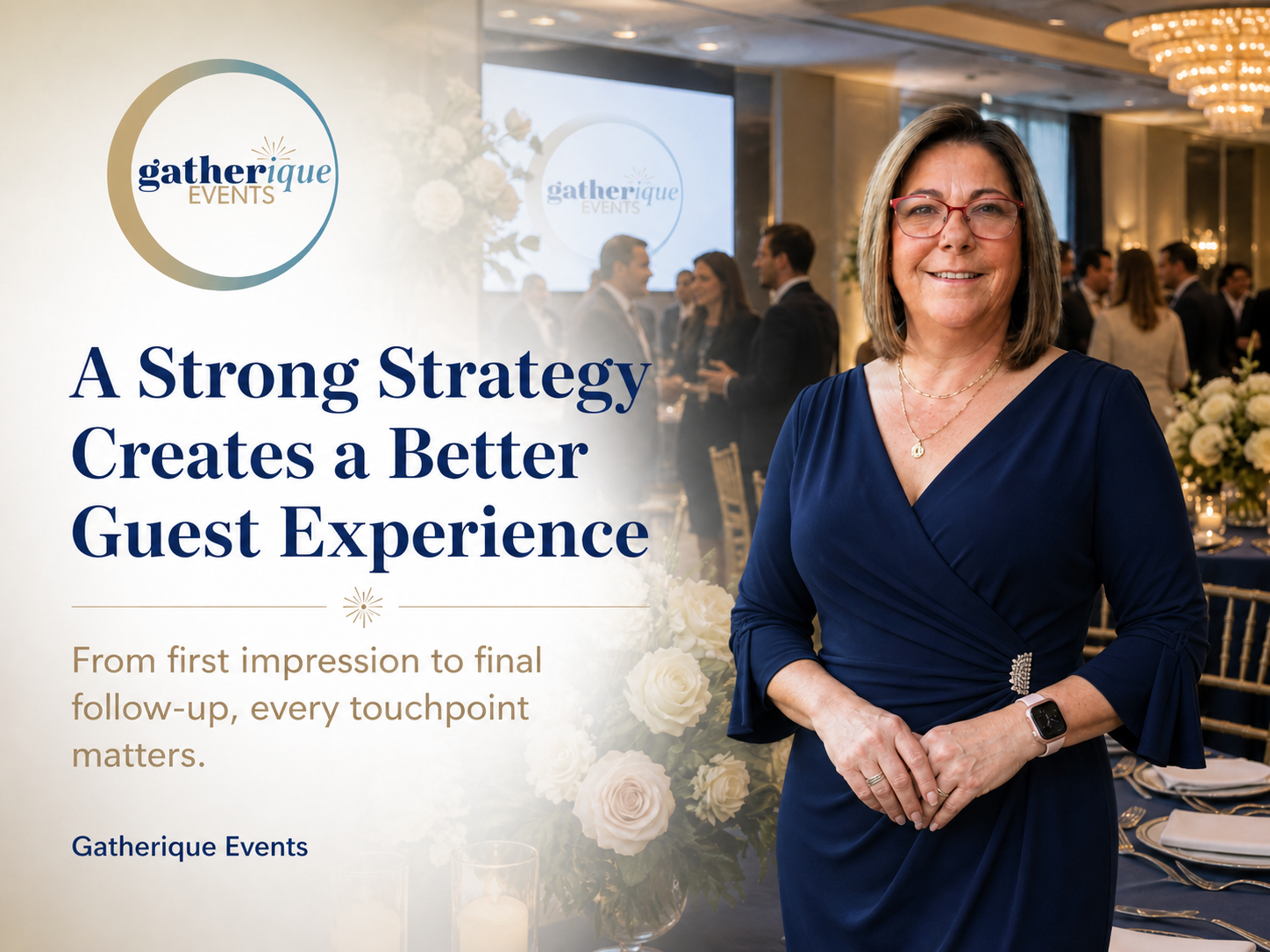
Strategic events create better guest experiences
People remember how an event made them feel.
They remember whether the experience felt organized, thoughtful, welcoming, and worth their time. They remember the moments of connection. They remember whether the flow made sense. They remember if the purpose was clear.
A strong event strategy helps shape the guest journey from beginning to end.
That includes the first impression, the registration process, the room layout, the program flow, the food and beverage timing, the signage, the transitions, the networking moments, and the follow-up after the event.
When every touchpoint is connected to the bigger purpose, the event feels smoother and more meaningful.
Strategic events support stronger outcomes
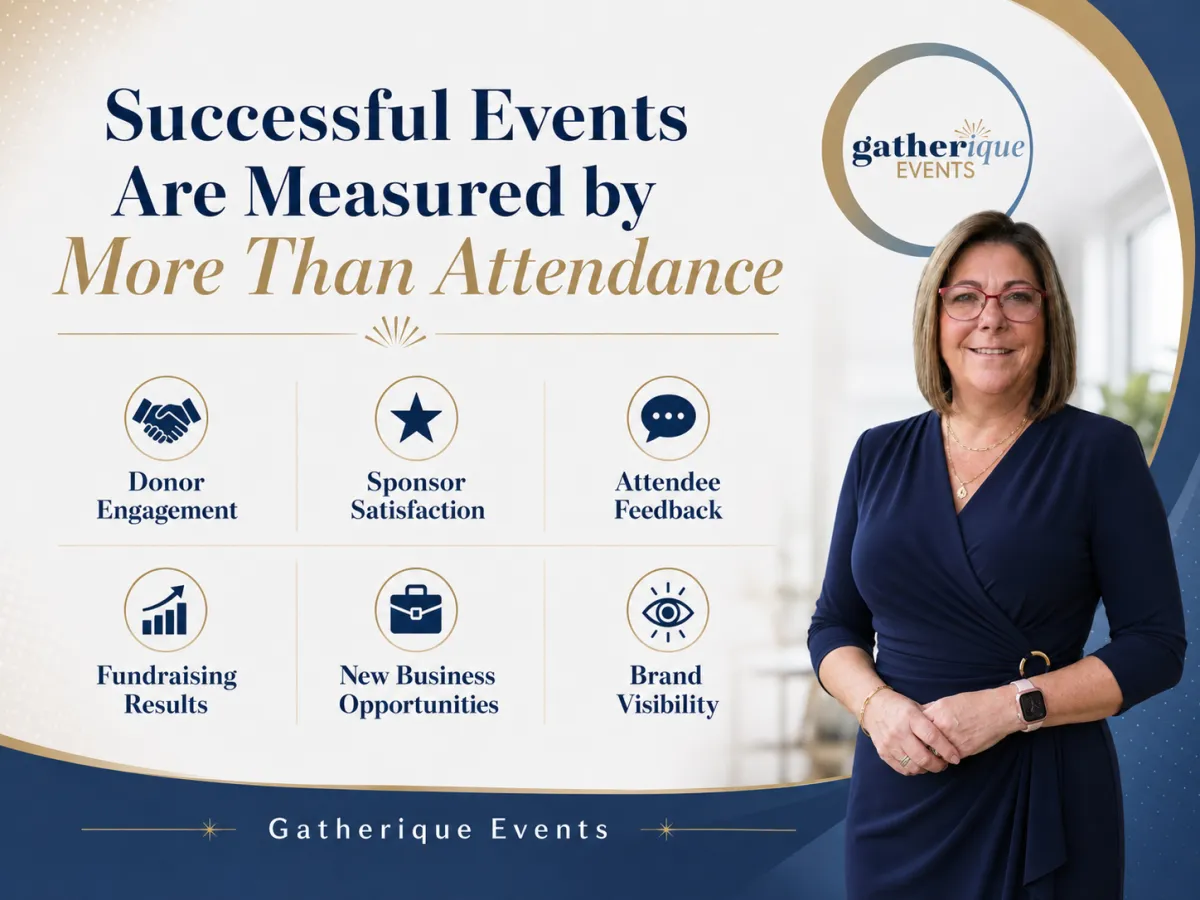
One of the biggest mistakes organizations make is measuring an event only by attendance.
Attendance matters, but it is not the full picture.
A successful event should be measured by the outcomes that matter most to the organization. That may include:
Increased donor engagement
Sponsor satisfaction
New business opportunities
Stronger employee connection
Improved attendee feedback
Higher fundraising results
Greater brand visibility
Post-event action or follow-up
When the goals are defined early, the event can be planned in a way that supports those goals.
This is especially important for organizations investing time, money, staff resources, and leadership energy into an event. The event should not just look good. It should work.
What happens when there is no strategy?
Without strategy, events can become reactive.
Decisions are made quickly. Budgets shift without direction. Vendors are selected without a clear experience plan. Sponsors may not receive meaningful value. Guests may attend, but leave without a clear takeaway.
The event may still happen, but it may not deliver the impact it could have.
This is where many organizations lose time, money, and momentum.
A strategy-first approach helps prevent confusion, reduce last-minute stress, and create a stronger planning structure from the beginning.
The Gatherique Events approach
At Gatherique Events, we believe in Strategy First. Logistics Second.
That does not mean logistics are less important. It means logistics are stronger when they are guided by strategy.
Our role is to help organizations bring clarity, structure, and calm execution to the event planning process. From conferences and galas to retreats, trade shows, fundraisers, and corporate gatherings, we help ensure each event is designed with purpose, polish, and impact.
We look at the full picture:
The goals
The audience
The guest experience
The budget
The vendor team
The sponsor opportunities
The timeline
The onsite execution
The post-event follow-up
Because great events do not happen by chance.
They happen when thoughtful strategy and organized execution work together.
Planning an upcoming event?
If your organization is planning a conference, gala, leadership retreat, fundraiser, trade show, or corporate event, now is the time to start with strategy.
Before you book the room or build the agenda, get clear on what success looks like.
That clarity will shape every decision that follows.
At Gatherique Events, we help organizations create events that are intentional, organized, and designed to move goals forward.
Let’s create something extraordinary together.
www.gatheriqueevents.com